Fraport partners with global airports in the AeroAS Autonomous Airport Operations Program to drive innovation and a smarter, more efficient future
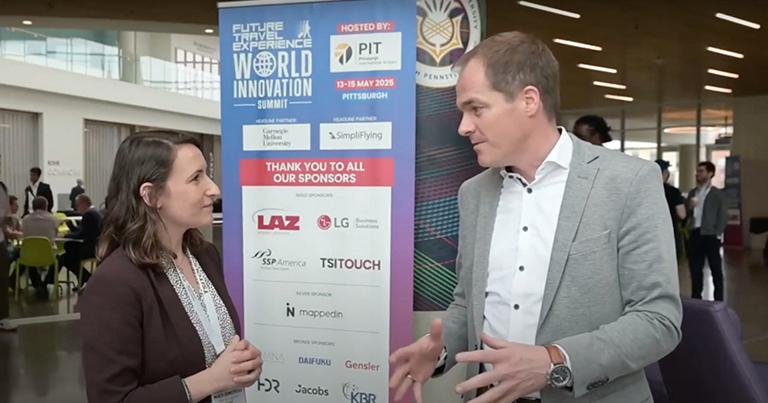
In this video interview, Claus Grunow, Vice President of Corporate Strategy and Digitalization, Fraport, discusses the AeroAS Autonomous Airport Operations Program, involving over 120 global airports.
In an exciting step toward transforming airport operations, Fraport – a Corporate Partner of the FTE Digital, Innovation & Startup Hub – is leading the charge in the AeroAS Autonomous Airport Operations Program. In this video interview, following his participation at the recent FTE World Innovation Summit, Claus Grunow, Vice President of Corporate Strategy and Digitalization, Fraport, shares how this groundbreaking initiative brings together over 120 global airports with the shared goal of integrating autonomous technologies to drive innovation, improve efficiency, and shape a smarter, more sustainable future for the aviation industry.
Airports around the world are facing increasing pressures: growing passenger and cargo volumes, rising operational costs, and a shortage of skilled labour. As the aviation industry evolves, many of the systems and processes that support airport operations are still heavily reliant on human labour, even in the face of rapidly advancing technology. In response, the AeroAS Autonomous Airport Operations Program is looking to usher in a new era of efficiency by embracing autonomy at a scale that has never been attempted before.
At many airports, certain procedures and tasks have remained unchanged for decades. While technology has made significant strides in other sectors, the airport industry has lagged behind, with many critical operations still managed by human staff. These operations can be inefficient, costly, and ultimately unsustainable in a world where operational excellence and traffic growth are paramount. The reality is that airports simply cannot scale their workforce to meet the increasing demands for higher performance and faster turnaround times.
“The next step will be to approach the tech players that are out there that have proven their success already, and our aim is to bring one of these autonomous vehicles to one of the airports within the next year,” says Grunow. “Autonomous vehicles, already proven in urban environments, have the potential to revolutionise the way airports operate – driving innovation and operational efficiency, particularly in the areas of crew transportation and logistics.”
Yet, the challenges are significant. Developing autonomous systems that can be scaled to airport environments is expensive, and no single airport has the resources to carry this burden alone. For that reason, collaboration has become the key to making autonomy a reality at airports.
A collaborative approach to innovation
The AeroAS program brings together 126 airports so far, with the goal of creating a shared technological ecosystem that can integrate autonomous systems into everyday airport operations. By pooling resources and expertise, this initiative hopes to break down the barriers that have hindered autonomous technology from being scaled to airport use.
“I am really excited about this initiative,” says Grunow. “We are trying to bring autonomous vehicles to the airports. It has been tried by several airports individually, but this is the first time that the industry gathers together.”
The concept of collaboration isn’t just about technology sharing – it’s about aligning financial and strategic resources to make innovation more affordable and scalable. By working together, the participating airports hope to unlock the potential for economies of scale, reducing the development costs and risks associated with adopting new technologies.
One of the most appealing aspects of this initiative is its potential for cost efficiency. With multiple stakeholders contributing to the development and implementation of autonomous systems, costs are shared, and risks are reduced. By pooling resources, airports and technology providers can fast-track development, making it easier to implement proven technologies.
Standardisation is another key benefit. As the program takes shape, establishing industry-wide standards for autonomous systems will be crucial for ensuring compatibility and long-term sustainability. This could potentially lead to a future where systems from different stakeholders seamlessly interact, creating a more cohesive operational environment for airports.
“This is the first time that the industry gathers together,” Grunow explains. “By joining forces – more than 120 airports – we will hopefully convince the tech players that it is a market where they can scale and we might even be able to convince third-party money, like venture capital, to invest in these cases.”
If your airport or organisation is exploring how to scale innovation through autonomy, Fraport welcomes you to be part of this unique global collaboration. To express your interest in the AeroAS Autonomous Airport Operations Program, feel free to connect with Claus Grunow on LinkedIn.
Efficiency and sustainability: the driving forces
For airports, the main driver behind the push toward autonomous systems is efficiency. Autonomous vehicles could streamline operations, reduce traffic congestion, and free up valuable human resources for more complex duties.
“We believe it has high potential in terms of optimising airport operations,” Grunow shares. “The shortage of labour, particularly in the air transport sector, makes this a very timely innovation. It’s not just about reducing costs – it’s about improving overall efficiency, and even sustainability, as autonomous vehicles are more energy-efficient.”
One of the first practical use cases being explored involves autonomous vehicles transporting airline crews from their operations centres to aircraft. “We’re in close collaboration with Lufthansa, for instance, and their team on autonomous services,” says Grunow. “That would be probably one of the first use cases.”
This early-stage success could be the catalyst for broader adoption. With a shared commitment to innovation, cost-efficiency, and sustainability, the future of autonomous airport operations looks brighter than ever.
Hear more from Fraport at the co-located APEX FTE EMEA and Ancillary & Retailing events, taking place in Dublin on 10-12 June 2025. Johannes Noack, Product Manager eCommerce, Fraport, is participating in a session focused on ‘Embracing new approaches and models to enhance commercial performance at airports’.
Groundbreaking FTE Smart Ramp program, accelerating automation and collaborative innovation
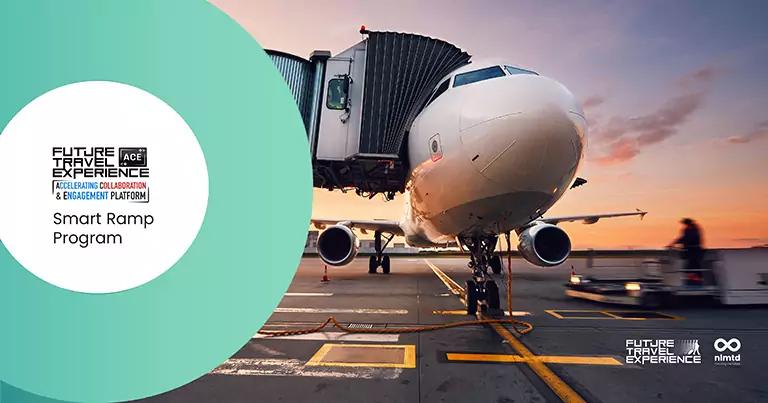
Smart Ramp is the latest initiative as part of the groundbreaking FTE Accelerating Collaboration & Engagement (ACE) platform launched in partnership with innovation consultancy nlmtd. ACE is dedicated to driving real collaborative action among stakeholders, facilitating fast progress and dynamic change in key areas of the aviation industry which are ripe for transformation. International Airlines Group, Miami International Airport, All Nippon Airways, Royal Schiphol Group, KLM Royal Dutch Airlines, and Metropolitan Washington Airports Authority are all members of what is a truly global collaborative innovation initiative.
The focus on Smart Ramp operations has the ultimate goal that aircraft turnaround can be achieved autonomously and more efficiently. A phased approach will assess which solutions truly work by each member testing new technologies, while incorporating requirements from the other participants. The program will support startups and introduce new suppliers not yet active in aviation, forging paths together on how to overcome hurdles while also exploring the potential for shared investments in the future. Results of the innovations will be shared with respective experts, industry bodies and regulators, meaning the outcomes can be used to create recommended practices and standards in the industry.
Rapid progress has been made since the launch of Smart Ramp and the innovation challenges already planned by members include some 20 projects across eight airports in 2025. These include All Nippon Airways implementing autonomous towing tractors for cargo transportation to efficiently move cargo from the warehouse to the apron, reducing the need for manual labour in operations.
You may also be interested in
12 technology and CX trends that can enhance airline and airport operations in 2025
https://www.futuretravelexperience.com/2025/06/fraport-partners-with-global-airports-in-the-aeroas-autonomous-airport-operations-program-to-drive-innovation-and-a-smarter-more-efficient-future/?fsp_sid=1900
Future Travel Experience
FTE Global: Air Transport Innovation Event
FTE Asia: Airport Innovation & Digital Transformation
FTE EMEA: Aviation & Passenger Experience Forum
Airline Ancillary & Retailing Strategies
Smart Airports & Digital Airline Transformation


Comments
Post a Comment